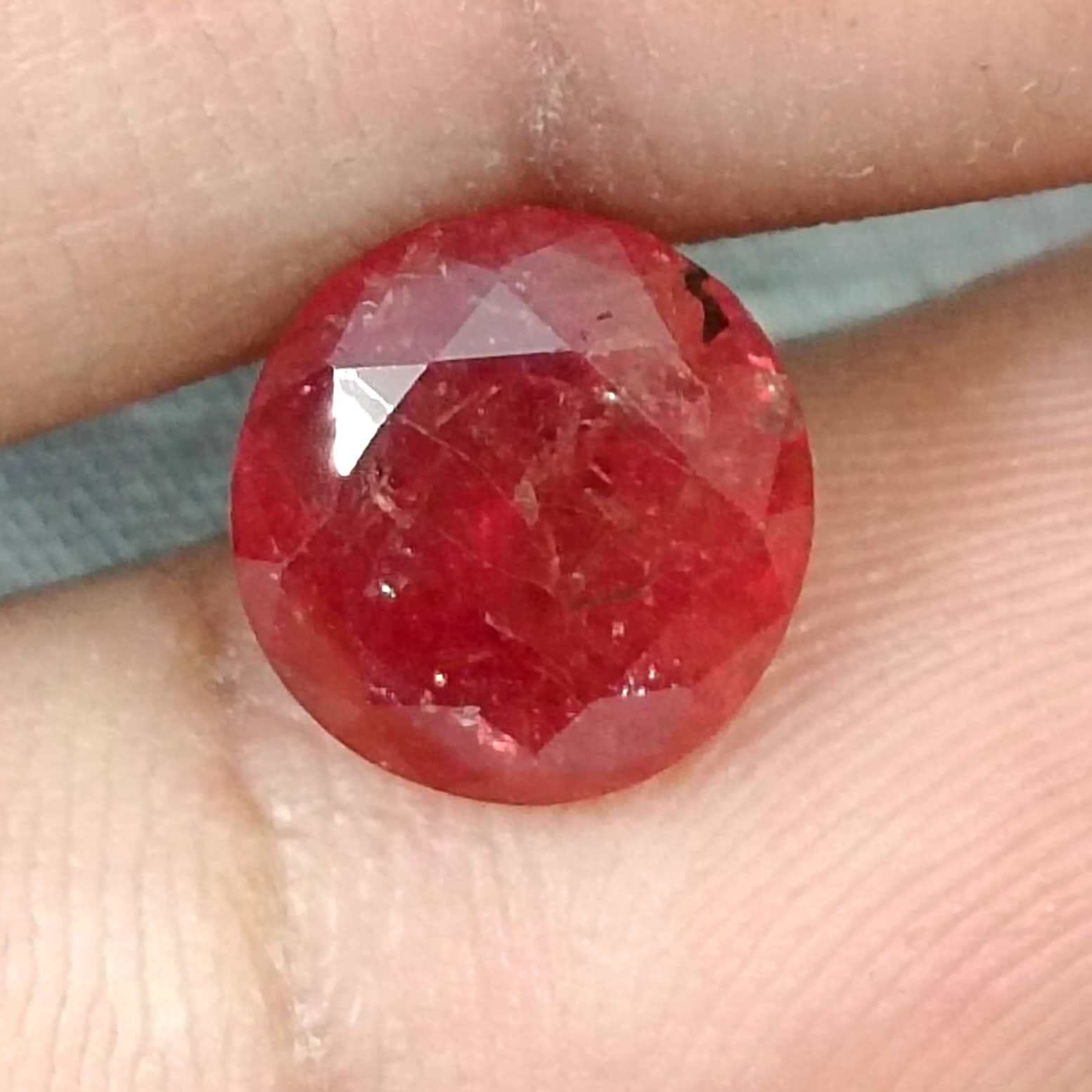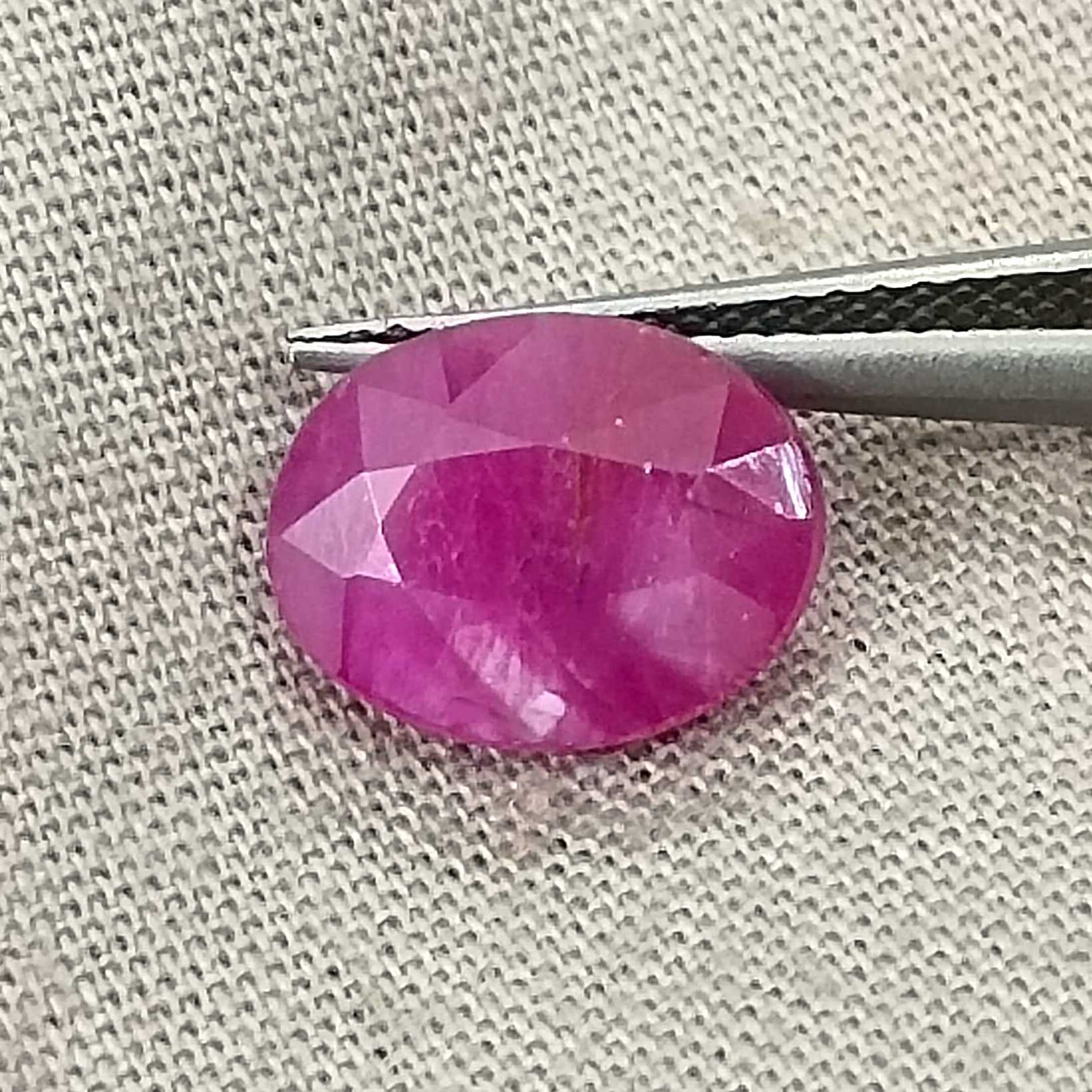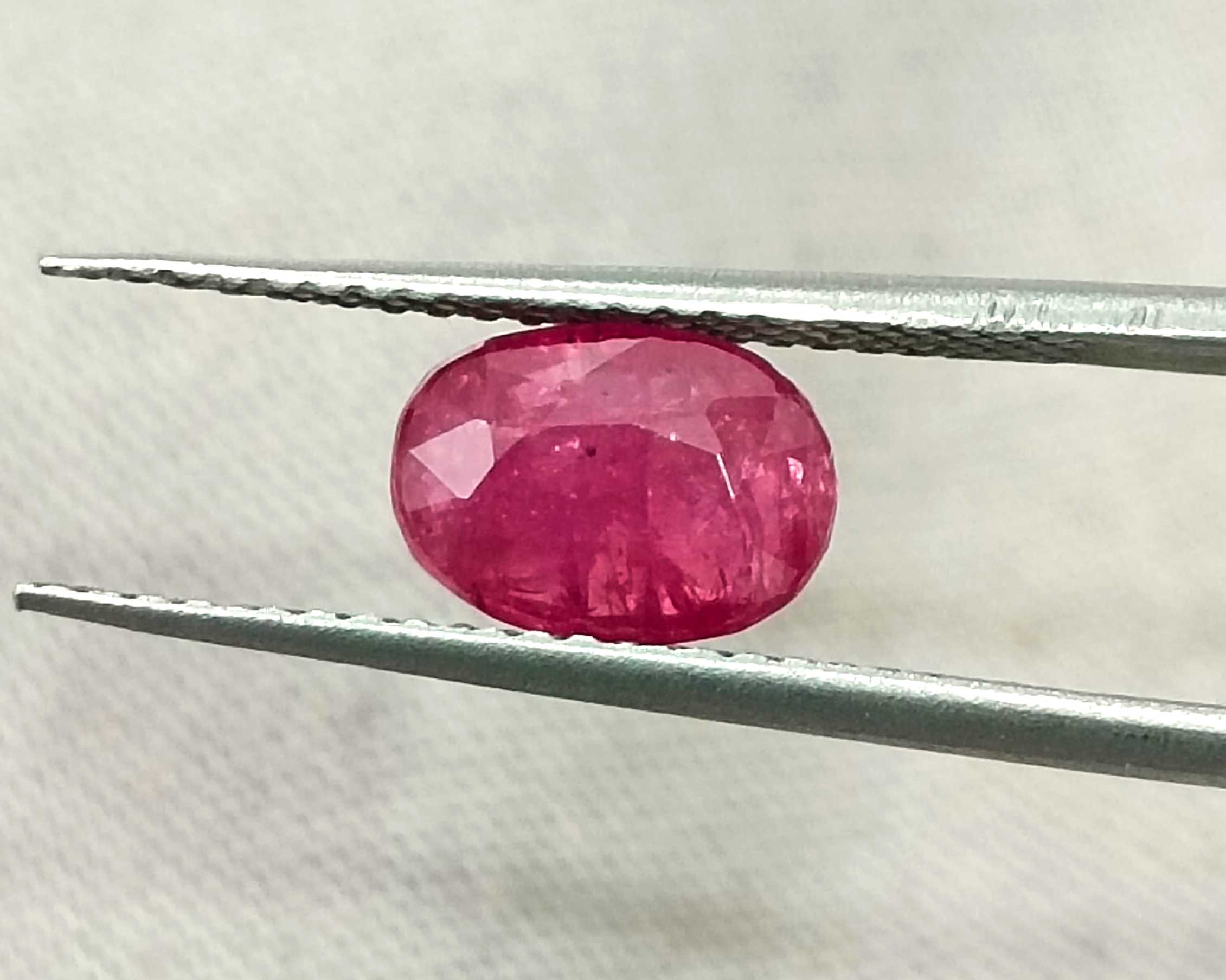

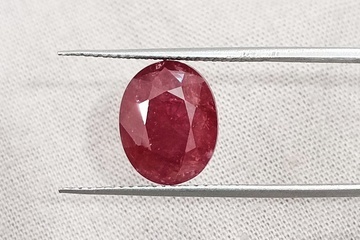
A Burmese ruby, also known as a Myanmar ruby, is the world's most desirable and one of the most valuable ruby gemstone. It comes generally in pinkish tones followed by purple undertone but the most desirable is pure red which has a tint of orange or slightest purplish.
Mined primarily from the legendary Mogok Stone Tract and, to a lesser extent, the Mong Hsu region of Myanmar, top rubies from here are celebrated for their exceptional color, brilliance, rarity, and historical significance.
For centuries, Burmese rubies have been regarded as the benchmark for premium-quality natural rubies and are highly sought after by collectors, investors, jewelers, and gemstone enthusiasts.
The value of a Burmese ruby is determined by a combination of factors:
The fine selected rocks from this region have Rich, vivid red color
Excellent transparency
Strong natural fluorescence
High clarity (for a natural untreated ruby)
Untreated or minimally treated origin
Authentic Myanmar origin
Actually in history more of the best quality rubies have been mined here so the region became famed.
Also fine-quality Burmese rubies are among the rarest colored gemstones, often commanding prices that exceed those of diamonds of similar size. And also marketing has played the role.
The ruby with more pink seen or much purple will always be much less in value.
Though as a brand name and also the quality these are generally considered most sought after of other rubies. Though now Mozambique region have also produced best of the class rubies, equal to Burmese.
In words of Jewelfields; Actually any ruby or other gemstone should be valued upon how finally it is looking, it's qualities etc. So the rubies which were mined in olden times, amongst them the best pieces in quality were found in Burma region. So it was marketed this way by traders there. And we were taught to believe that Burma origin rubies are best. But even the mines here can get worst quality crap, opaque pink stones, or stones with very heavy inclusions.
So many customers are fooled by charging high prices for low quality Burmese ruby. So keep awareness is the myntra.
So just because the name has been advertised that way it should not be believed that Burmese ruby will only be the best one. A best one has to be nearest to pure red colour, with fine clarity, shine and cut.
If suppose even some better quality starts to be mined in some another region of the world then that should be the best one. And so is how the prices and value should be decided.
Now the customers have started to understand this marketing mimic and practically going for real better quality and just not the name.
The term "Pigeon's Blood Ruby" refers to the finest and most prized ruby color—a vibrant, intense red with a very minor hue of blue/purple and subtle hint of fluorescence that gives the gem an extraordinary glow.
Although the term originated in Myanmar, not every Burmese ruby qualifies as Pigeon's Blood. Only a small percentage of natural rubies display this exceptional color. And the pigeon blood refers not to the color of the blood of the bird pigeon but the color of its eyes.
Gubelin gemstone laboratory has termed this unique attractive color as pigeon blood. But now even few other labs use this name in their certificates.
The most famous ruby-producing regions in Myanmar include:
Mogok Stone Tract – Home to many of the world's finest natural rubies.
Mong Hsu – Produces significant quantities of quality rubies, many of which undergo heat treatment to enhance color and clarity.
Among these, Mogok remains the most prestigious source of premium Burmese rubies.
Most rubies available in the global market have undergone heat treatment to improve their appearance. Heat treatment is widely accepted within the gemstone industry when properly disclosed.
However, natural untreated Burmese rubies are exceptionally rare and command significantly higher prices due to their scarcity and natural beauty.
Always request a certificate from a reputable gemological laboratory like IIGJ, GRS, IGI, GSI, GIA, SSEF confirming any treatment status and origin.
If the treatment says as heated with residues in the fissures, with minor/moderate quantity. In this case its very cheap in price. Do not get fooled by buying such paying higher prices. As it's like having small amount of lead glass or borex inside.
Gemologists often observe:
Fine rutile silk
Fingerprint inclusions
Calcite crystals
Strong red fluorescence
Relatively low iron content
This combination is more typical of classic Mogok rubies than rubies from many other sources.
1. Good transparency and luster/brilliance. 2. Many burmese rubies show much pink colour and that pink makes them less valuable. The color should be more red with may be a hint of pink or purple only. Orangy looks even better but when is very less. The color should be more towards pure red. 3. Buy from a trusted and established dealer
4. Ask for a reliable certificate which mentions origin, some of the well known labs are mentioned above.
5. Proper cut and polish, and no open cracks.
Fine untreated Burmese rubies with outstanding color are among the highest-priced colored gemstones in the international market.
Conclusion-
A natural Burmese ruby represents the pinnacle of ruby quality, combining remarkable color, rarity, and enduring value. Whether purchased for fine jewelry, collecting, or long-term investment, a certified Burmese ruby from Myanmar remains one of the most prestigious gemstones in the world. Understanding its origin, treatment status, and quality charactestics is important to make a reasonable purchase.
Buy natural untreated Burmese ruby with confidence at Jewelfields INDIA.
As we are the traders of natural emerald, diamond and blue sapphire we also keep selected good looking quality of Burma and other origin ruby like Africa, and Afghanistan at very reasonable prices for business.
We used to manufacture the rubies by ourseelf but as no transparent rough is coming here now, and if it's coming then as few pieces only because transparent ruby is a rare gem now. So we deal in reasonably good quality rubies in all price ranges.
We ship ruby and other gems to all over the world with doorstep shipping. Countries we ship to are United States of America USA, Australia, Europe, Italy, UK, Chona, Singapore, Hong-Kong, UAE, Germany, etc.