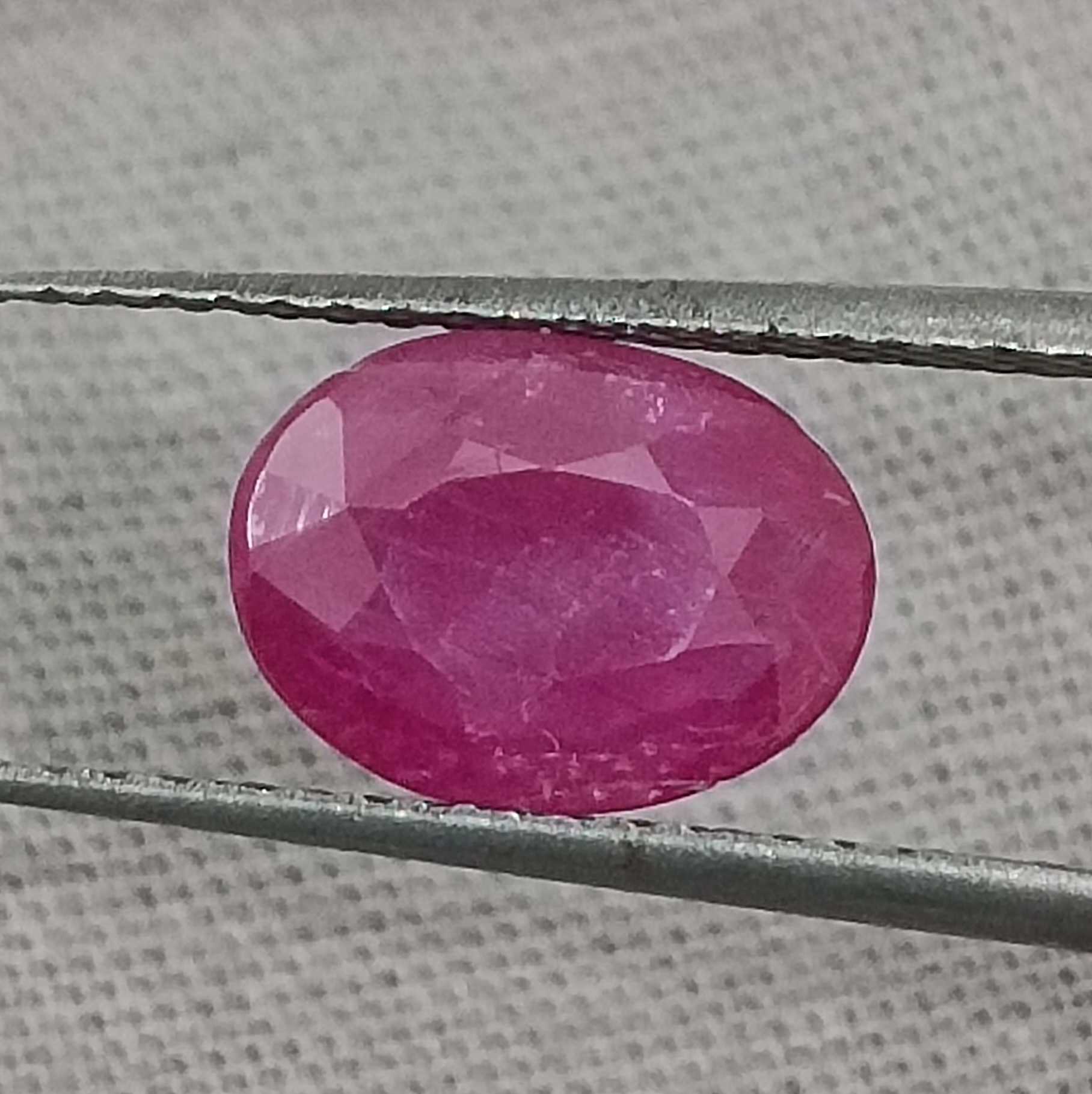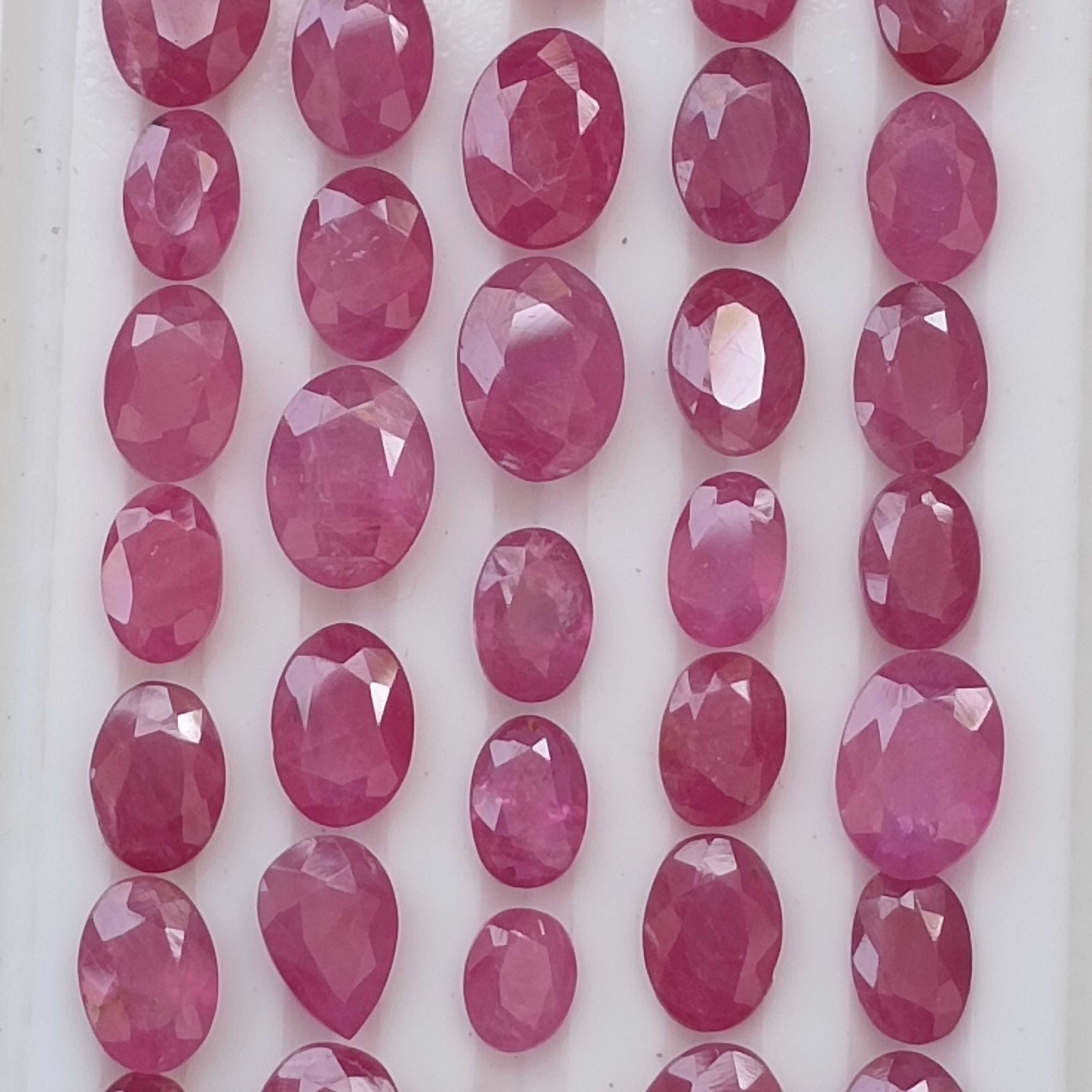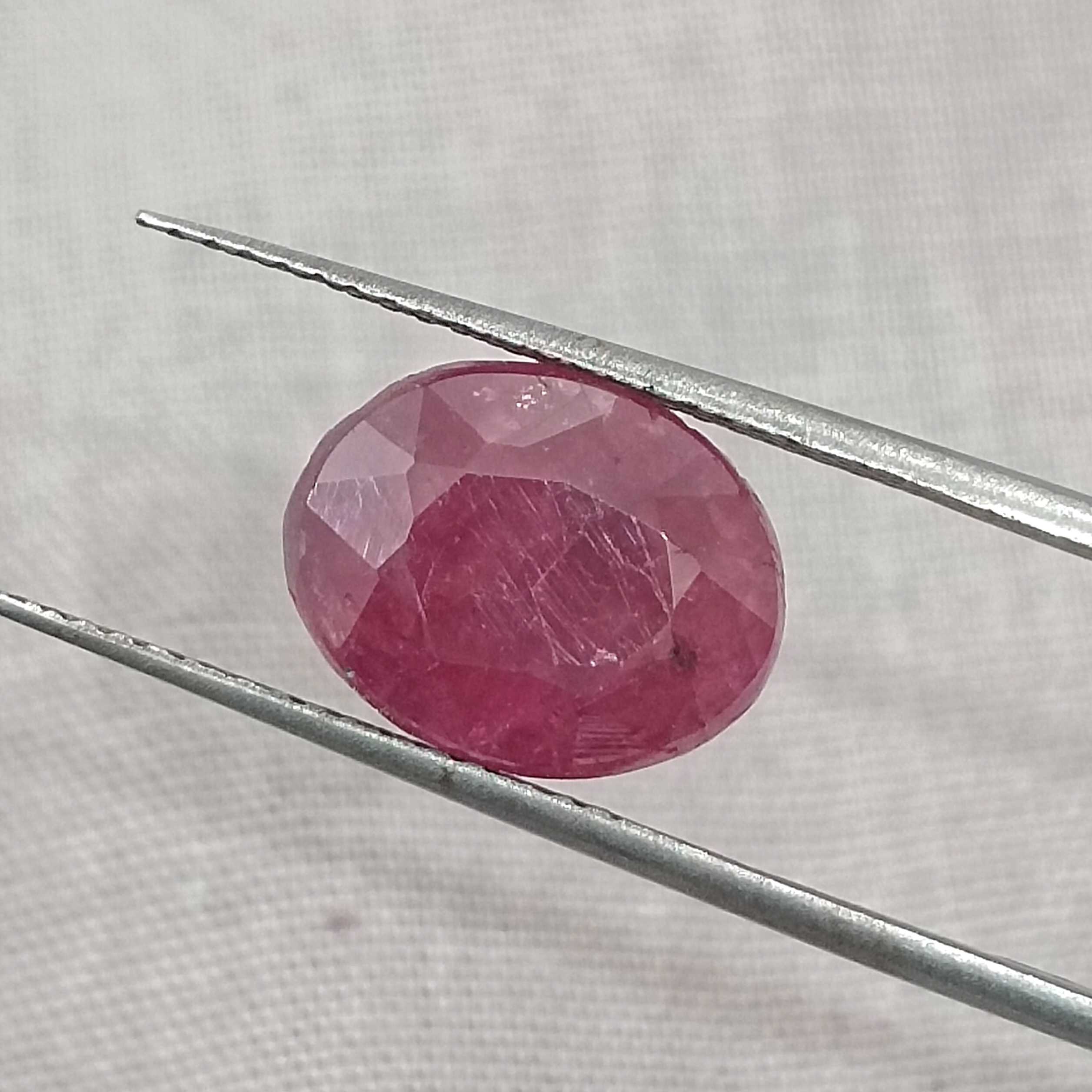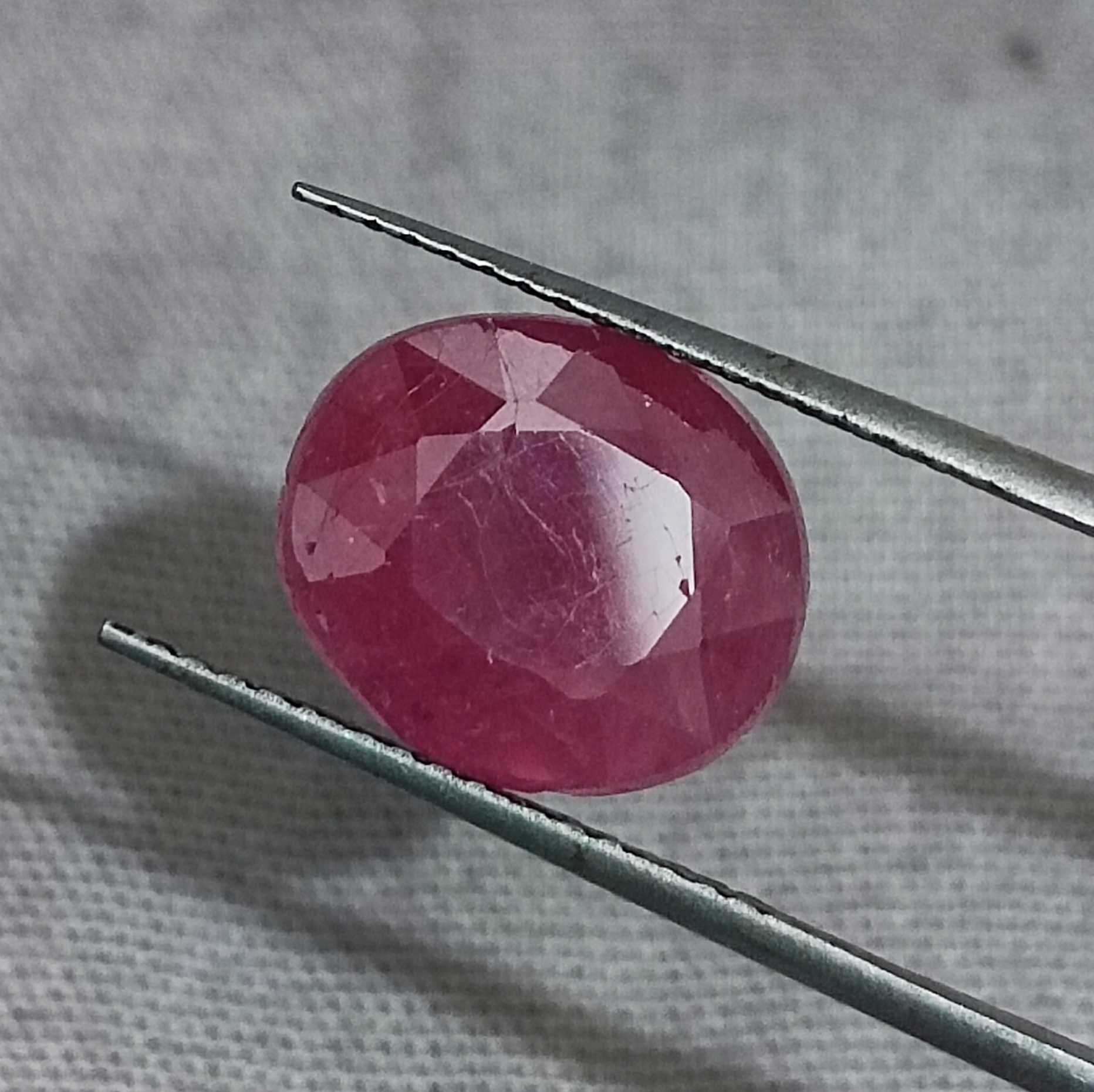

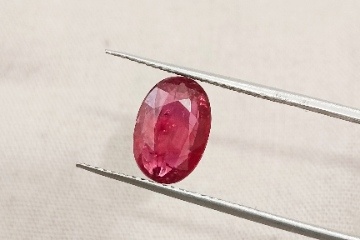
African rubies have become an important part of the international coloured gemstone market. Over the past few decades, ruby deposits in Mozambique, Tanzania, Kenya and Madagascar have brought a wide range of natural ruby into the global trade. Among these sources, Mozambique has become particularly significant, with the Montepuez deposits in northern Mozambique developing into one of the world's major ruby-producing areas.
The term African ruby covers a broad range of natural gemstones rather than one uniform quality. African rubies can range from heavily included commercial cabochons and beads to transparent, strongly coloured clean clarity cut and polished stones suitable for fine jewellery.
Understanding the origin, quality, treatment and value of these gemstones is therefore important for both individual buyers and professional gemstone businesses.
African ruby deposits developed under different geological conditions, which is one reason African rubies show such a wide variety of colours, inclusions and transparency. Mozambique's Montepuez deposits, for example, are associated with complex metamorphic geology in the Mozambique and Zambezi Belt region. GIA research describes ruby mineralisation in the area as being associated particularly with amphibole-, mica- and feldspar-rich rocks.
For the gemstone trade, the major African ruby sources include Mozambique, Tanzania, Kenya and Madagascar, although individual countries contain several different deposits and ruby-producing localities.
Mozambique ruby has become the most prominent African ruby in the international market. Significant deposits near Montepuez were discovered in 2009, and the area rapidly became an important source of natural ruby. GIA describes Mozambique as a major new source that significantly changed the global ruby trade.
Mozambique produces ruby in a broad range of qualities. Some stones show attractive, saturated red colour but contain substantial inclusions, while selected material can have considerably better transparency and appearance.
The Montepuez region itself contains different deposits, including Mugloto, Ntorro, Maninge Nice and Glass. GIA research has documented differences between ruby populations from these areas. Maninge Nice-type ruby is often strongly coloured and fluorescent but can be highly included, whereas material from Mugloto has produced some of the higher-quality ruby from the region.
This variation demonstrates an important point: Mozambique origin alone does not determine ruby value. The individual gemstone must still be judged on its colour, transparency, clarity, treatment and overall appearance.
Tanzania is another important source of natural African rubies and has several recognised ruby-producing regions.
Winza ruby became particularly well known in the international gemstone market for its attractive colour and distinctive crystals. Other Tanzanian material comes from areas including Longido and the Umba region.
Longido is especially interesting because ruby can occur in ruby-in-zoisite, producing contrasting red and green mineral specimens. Transparent facet-grade ruby has also been documented from the area.
Tanzanian rubies therefore range from commercial and included material to good clarity attractive faceted gemstones and unusual fine quality collector specimens.
Kenyan ruby is associated with several deposits, including the Mangari area. Kenyan material can display attractive red colour and strong fluorescence and is of particular interest because of its distinctive geological setting.
Madagascar ruby adds another important category to the African ruby market. Madagascar is one of the world's most diverse coloured gemstone sources, and its ruby deposits produce material across a wide quality spectrum.
These sources are generally less dominant in volume than Mozambique, but particular stones can be valuable because of colour, transparency, clarity, rarity, locality and treatment characteristics.
For commercial purposes, African rubies can be broadly divided into commercial, moderate, good and fine quality.
Commercial-quality African rubies commonly contain visible inclusions, fractures, lower transparency or uneven colour. They can nevertheless be attractive when viewed from the front and are widely used for affordable jewellery, cabochons and commercial gemstone products.
Moderate-quality African rubies generally offer a better balance of colour, transparency and appearance. This category is particularly useful for jewellery manufacturers and wholesale gemstone buyers seeking natural ruby without the premium associated with exceptional material.
Good-quality African ruby normally combines higher clarity, stronger colour saturation, improved transparency, and fewer distracting inclusions. Selected stones in this category can be suitable for fine jewellery and specialist gemstone collections.
Exceptional African rubies are much rarer and may combine vivid red colour, excellent transparency, attractive fluorescence, good clarity, larger size and favourable treatment characteristics.
The value of an African ruby depends on several factors, with colour generally being one of the most important. Strong, vivid and attractive red is normally more desirable than weak, excessively dark, brownish or poorly saturated colour. Even relatively small differences in colour can have a significant effect on the per carat price.
Transparency and clarity are also important. Natural ruby commonly contains inclusions, so an included stone is not automatically considered poor quality. However, inclusions that significantly reduce transparency, beauty or durability generally reduce value.
Treatment is another major consideration. Heat treatment is common in the ruby industry and can improve colour and transparency. Buyers should establish whether a stone is untreated, heated or has undergone other enhancement. Treatment information becomes particularly important when comparing prices because untreated ruby of attractive quality is considerably rarer.
Size can have a strong influence on value, particularly for better-quality ruby, because larger stones with attractive colour and clarity are uncommon. Cutting and proportions also influence the final appearance, while the value of a finished stone ultimately depends on the combination of colour, clarity, transparency, treatment, size, cut, origin and overall beauty, rather than any one factor in isolation.
The terms natural African ruby and certified African ruby are important to buyers who want greater confidence in the gemstone's identity and treatment.
An independent gemological laboratory can examine rubies to determine whether it is natural or synthetic and can report detectable treatments. Depending on the laboratory and service requested, a report may also provide an opinion on geographic origin.
Certification, however, should not be confused with a quality grade. A certified ruby can be commercial quality, moderate quality or exceptional quality. The laboratory report provides gemological information; the actual beauty and market value of the stone must still be evaluated.
For higher-value African rubies, independent certification can be particularly useful when treatment or geographic origin has a meaningful effect on the purchase price.
The African ruby wholesale market covers a particularly broad range of gemstones. Jewellery manufacturers and dealers can purchase commercial-quality ruby for affordable jewellery, moderate-quality material for better-value collections, or good-quality stones for higher-end applications.
For professional buyers, the most important considerations are consistent quality, accurate treatment disclosure, reliable gemstone descriptions and competitive pricing.
This broad range is one of the main advantages of African ruby. Buyers do not necessarily need to purchase the rarest and most expensive ruby to create attractive jewellery. A well-coloured, naturally included commercial or moderate-quality ruby can offer excellent business value when its appearance is appropriate for the intended product.
Jewel Fields is a seller, supplier, trader and manufacturer of natural African rubies, offering moderate-quality, good-quality and commercial-quality African ruby gemstones for wholesale and business buyers.
Our selection is intended for gemstone dealers, jewellery manufacturers, retailers, collectors and international buyers looking for natural African rubies at reasonable wholesale business prices.
Jewel Fields focuses on practical commercial value, offering African ruby suitable for different jewellery applications and budgets. Buyers can source natural African ruby in different quality levels according to their requirements rather than being restricted to only premium collector-grade material.
For businesses searching for an African ruby supplier, African ruby wholesaler, African ruby trader, African ruby manufacturer or natural African ruby gemstone supplier, Jewel Fields provides a range focused on quality, commercial usability and competitive wholesale business pricing.
Mozambique is currently the best-known major African ruby source, particularly because of the large deposits around Montepuez in northern Mozambique.
Yes. African rubies range from relatively affordable commercial gemstones to rare and highly valuable fine-quality stones. Value depends primarily on the individual gemstone's colour, transparency, clarity, treatment, size and overall appearance.
Naturally occurring ruby is found in several African countries. However, individual stones should be properly identified, particularly when purchasing higher-value material.
Certified African rubies are natural or otherwise identified ruby gemstones accompanied by a gemological laboratory report. Depending on the laboratory, the report may address identity, treatments and geographic origin.
African rubies are available through specialist gemstone suppliers and traders. Jewel Fields supplies natural African rubies in commercial, moderate and good qualities for wholesale business buyers at competitive and reasonable wholesale prices.
African rubies have become an important category in the global gemstone industry, with Mozambique, Tanzania, Kenya and Madagascar providing distinctive natural ruby from different geological environments.
Their greatest advantage is the wide range of quality and price available. From commercial African ruby for jewellery manufacturing to good-quality and exceptional stones for specialist buyers, African ruby can meet very different requirements.
For anyone searching for African rubies, Africa rubies, natural African rubies, certified African rubies, Mozambique ruby, Tanzanian ruby, African ruby wholesale or African ruby suppliers, understanding the individual gemstone is essential. Country of origin is useful information, but colour, transparency, clarity, treatment, size, cutting and documentation ultimately determine the gemstone's desirability and market value.
Jewel Fields supplies, trades and manufactures natural African rubies in commercial, moderate and good qualities, with a focus on practical gemstone value and reasonable wholesale business prices for professional buyers worldwide. We ship gemstones all over the world including Dubai, China, Hongkong, Europe, Canada, Saudi Arabia, Malaysia, America etc.